



2-Horse vs 3-Horse vs 4-Horse Living Quarters Trailers: Which Should You Buy? Comparison Guide
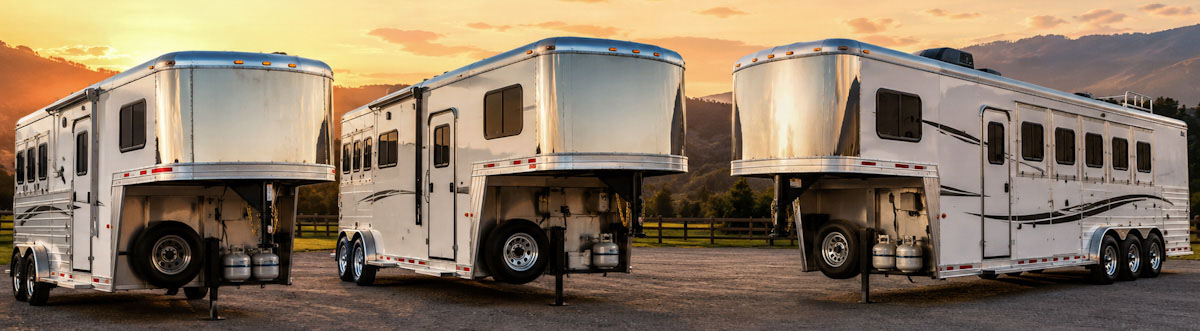
Choosing between a 2-horse, 3-horse, and 4-horse living quarters trailer is not just about how many horses you own.
That is the beginner mistake.
The better question is:
How many horses do you normally haul, how much living space do you need, how much storage do you want, and what trailer can your truck safely handle?
A living quarters horse trailer is part horse trailer, part camper, part tack room, and part mobile base camp. The larger the trailer, the more capacity you get. But you also take on more weight, more cost, more maintenance, more storage requirements, and more responsibility behind the wheel.
This guide compares 2-horse, 3-horse, and 4-horse living quarters trailers so you can choose the size that fits your horses, your truck, your travel style, and your budget.
Looking for current inventory? Browse our living quarters horse trailers for sale here:
Living Quarters Horse Trailers for Sale
Quick Comparison: 2-Horse vs 3-Horse vs 4-Horse Living Quarters Trailers
| Trailer Size | Best For | Main Advantage | Main Tradeoff |
|---|---|---|---|
| 2-Horse Living Quarters Trailer | Solo riders, couples, weekend trips, shorter hauls | Easier to tow, park, store, and maneuver | Less horse capacity and less storage |
| 3-Horse Living Quarters Trailer | Most private owners, families, show riders, trail riders | Best balance of capacity, storage, comfort, and resale appeal | Heavier and longer than a 2-horse |
| 4-Horse Living Quarters Trailer | Trainers, rodeo families, show competitors, multi-horse households | Maximum hauling capacity and storage flexibility | More expensive, heavier, and harder to maneuver |
For many buyers, the 3-horse living quarters trailer is the sweet spot. It gives you extra horse capacity and storage without being as large as many 4-horse trailers.
But that does not mean a 3-horse is always the right choice. A 2-horse may be smarter if you usually haul one or two horses and want something easier to handle. A 4-horse may be the better long-term buy if you travel with family, clients, or multiple horses.
What Is a Living Quarters Horse Trailer?
A living quarters horse trailer, often called an LQ horse trailer, is a horse trailer with a built-in living space. Most living quarters are located in the front of the trailer, especially on gooseneck models.
Common living quarters features may include:
- Sleeping area
- Bathroom
- Shower
- Toilet
- Kitchenette
- Refrigerator
- Microwave
- Cooktop
- Sink
- Air conditioning
- Heat
- Cabinets
- Sofa or dinette
- Water tanks
- Water heater
- Generator or generator prep
- Awning
- Shore power hookup
The horse area may include:
- Straight-load or slant-load stalls
- Padded dividers
- Drop-down windows
- Roof vents
- Fans
- Rubber mats
- Rear tack
- Saddle racks
- Bridle hooks
- Hay rack
- Mangers
- Ramp or step-up loading
The important point is this: stall count is only one part of the buying decision.
A 2-horse trailer with a larger living quarters area may be longer and heavier than a basic 3-horse trailer with a smaller weekend package. Always compare the full trailer, not just the number of stalls.
2-Horse Living Quarters Trailers
A 2-horse living quarters trailer is usually the smallest practical LQ option for buyers who want overnight comfort without owning a large rig.
These trailers are popular with solo riders, couples, weekend trail riders, and buyers who want something more manageable.
Best For
A 2-horse LQ trailer is usually best for:
- Solo riders
- Couples
- Weekend shows
- Local trail rides
- Shorter trips
- Buyers hauling one or two horses
- Buyers who want easier towing
- Buyers with limited storage space
Advantages of a 2-Horse Living Quarters Trailer
Easier to tow and maneuver
A 2-horse living quarters trailer is generally shorter and lighter than a comparable 3-horse or 4-horse model. That can make it easier to park, back up, turn around, fuel, and store.
This matters more than many buyers realize. A trailer that looks fine online can feel huge when you are trying to maneuver through a crowded showground or back into a tight campsite.
Lower purchase cost
All else being equal, a 2-horse LQ trailer usually costs less than a larger model. Price still depends on brand, age, condition, living quarters package, construction, generator, slide-out, and options, but a 2-horse is often the lower-cost way into an LQ trailer.
Good for simple weekend travel
If you mostly need a place to sleep, clean up, make coffee, and avoid hotel costs, a compact 2-horse LQ may be enough.
You may not need a large refrigerator, oversized bathroom, sofa, slide-out, or extra sleeping area if most of your trips are short.
Disadvantages of a 2-Horse Living Quarters Trailer
Limited horse capacity
This is the obvious downside. If you buy a 2-horse trailer and later need to haul three horses, you are stuck.
A 2-horse can become too small if:
- You add another horse
- Your kids start riding
- You travel with friends
- You begin hauling client horses
- You want a spare stall for gear
- You need to separate horses
Many buyers regret buying too small before they regret buying too large.
Less storage
Horse people do not travel light. Saddles, pads, bridles, hay, feed, buckets, blankets, show clothes, tools, hoses, chairs, and camping gear add up fast.
A 2-horse LQ may be easy to handle, but storage can get tight quickly.
Smaller living quarters
Some 2-horse LQ trailers have very compact living spaces. That may be fine for one person, but cramped for two adults or a family.
Before buying, check the bathroom size, bed space, kitchen layout, closet storage, seating, and whether two people can move around comfortably.
When a 2-Horse LQ Makes Sense
Choose a 2-horse living quarters trailer if you mostly haul one or two horses, take shorter trips, want easier towing, and do not need a lot of extra storage.
Browse current options here:
Living Quarters Horse Trailers for Sale
3-Horse Living Quarters Trailers
A 3-horse living quarters trailer is often the best all-around choice for private owners, families, show riders, rodeo competitors, and trail riders.
It gives you more capacity than a 2-horse without becoming as large and demanding as many 4-horse trailers.
Best For
A 3-horse LQ trailer is usually best for:
- Buyers who haul two or three horses
- Families
- Show riders
- Rodeo competitors
- Trail riders taking longer trips
- Buyers who want extra storage
- Buyers who may add another horse later
- Buyers who want broad resale appeal
Advantages of a 3-Horse Living Quarters Trailer
Best balance for many buyers
The biggest advantage of a 3-horse LQ is flexibility.
Even when you are not hauling three horses, the third stall can be used for:
- Extra tack
- Hay
- Feed
- Storage totes
- Show supplies
- Blankets
- Camping gear
- Portable panels
- Kid gear
That extra stall can make the entire trip easier.
More room to grow
A 2-horse trailer can become limiting quickly. A 3-horse gives you breathing room if your needs change.
That matters if:
- A child starts riding
- You buy another horse
- You haul with friends
- You attend longer events
- You need a backup stall
- You want more storage for gear
If you are unsure whether a 2-horse will be enough, a 3-horse may be the smarter long-term choice.
Strong resale appeal
A 3-horse LQ often fits the widest group of buyers. It can appeal to private owners, families, trail riders, show competitors, and small-scale trainers.
That does not guarantee easy resale, but it usually gives you a broader buyer pool than a very small or very large trailer.
Better storage and layout options
Many 3-horse living quarters trailers offer more usable storage than smaller models. Depending on the trailer, you may find rear tack, mangers, under-manger storage, larger closets, more cabinets, hay racks, and generator compartments.
Disadvantages of a 3-Horse Living Quarters Trailer
More truck may be required
A 3-horse living quarters trailer can get heavy once loaded with horses, water, tack, feed, hay, and personal gear.
Do not ask only, “Can my truck pull it?”
That is not enough.
Ask:
- Can the truck safely stop it?
- Can the truck handle the pin weight?
- Is the truck within payload rating?
- Is the truck within rear axle rating?
- Is the hitch rated correctly?
- Are the trailer tires rated for the load?
- Are the trailer brakes properly serviced?
A truck may have enough power to move a trailer and still be wrong for the job.
More expensive than a 2-horse
A 3-horse LQ usually costs more than a 2-horse because you are buying more trailer, more materials, more components, and often a larger living quarters package.
Harder to maneuver than a 2-horse
A 3-horse is still manageable for many experienced haulers, but it takes more room than a smaller trailer. Think about your driveway, barn area, gate width, storage space, fuel stations, and campground access before buying.
When a 3-Horse LQ Makes Sense
Choose a 3-horse living quarters trailer if you want the best balance of horse capacity, storage, comfort, and resale appeal.
For many buyers, this is the safest all-around choice.
Browse current options here:
Living Quarters Horse Trailers for Sale
4-Horse Living Quarters Trailers
A 4-horse living quarters trailer is built for buyers who need serious hauling capacity.
This size is popular with trainers, rodeo families, larger families, show competitors, and buyers who regularly travel with multiple horses.
A 4-horse LQ can be excellent, but it is not the size to buy casually. If you do not need the capacity, you may be buying extra weight, cost, maintenance, and hassle.
Best For
A 4-horse LQ trailer is usually best for:
- Trainers
- Rodeo families
- Show competitors
- Larger families
- Buyers hauling three or four horses
- Buyers hauling client horses
- Long-distance travelers
- Buyers needing maximum storage
Advantages of a 4-Horse Living Quarters Trailer
Maximum horse capacity
The obvious advantage is the ability to haul up to four horses. That matters for families, trainers, rodeo competitors, and buyers traveling with multiple animals.
Even if you do not haul four horses every time, the extra stall can be useful for gear, hay, feed, or emergency flexibility.
More storage flexibility
A 4-horse LQ often gives you the most storage options. Depending on the layout, you may have more room for tack, feed, hay, show supplies, tools, portable panels, and camping gear.
For longer trips, storage is not a luxury. It is what keeps the trip organized.
Better for family or professional use
If several people are traveling together, a larger living quarters trailer may be more practical. Some 4-horse LQ trailers offer larger bathrooms, more sleeping options, bigger refrigerators, more cabinets, slide-outs, and more comfortable floorplans.
More future-proof
If you know your horse count may grow, or if the trailer is part of your business, a 4-horse may prevent you from outgrowing the trailer too quickly.
Disadvantages of a 4-Horse Living Quarters Trailer
Requires serious truck capacity
A 4-horse LQ can be heavy, especially when loaded with horses, water, hay, feed, tack, generator fuel, tools, and personal gear.
You need to check the trailer’s GVWR, axle ratings, tire ratings, pin weight, and loaded weight against the truck’s towing capacity, payload, rear axle rating, hitch rating, and gross combined weight rating.
Do not buy a 4-horse living quarters trailer first and ask truck questions later. That is backwards.
Higher purchase and ownership cost
A 4-horse LQ usually costs more to buy and more to maintain. Larger trailers may mean higher costs for tires, brakes, bearings, axles, suspension, roof maintenance, storage, insurance, and repairs.
Harder to park, turn, and store
A 4-horse trailer can be a pain in tight places. Fuel stations, older fairgrounds, rodeo grounds, trailheads, narrow roads, and residential driveways can all become harder to manage.
Easy to overbuy
Some buyers want a 4-horse because it feels impressive. That is a bad reason.
If you mostly haul one or two horses locally, a 4-horse LQ may be more trailer than you need.
When a 4-Horse LQ Makes Sense
Choose a 4-horse living quarters trailer if you regularly haul multiple horses, travel with family or clients, need major storage, and have the right truck to handle it safely.
Browse current options here:
Living Quarters Horse Trailers for Sale
How to Choose the Right Size
Choose a 2-Horse LQ If…
A 2-horse living quarters trailer is probably right if:
- You usually haul one or two horses
- You want easier towing
- You want lower cost
- You mostly take weekend trips
- You do not need much extra storage
- You have limited parking space
- You do not expect your horse count to grow soon
Choose a 3-Horse LQ If…
A 3-horse living quarters trailer is probably right if:
- You want the best all-around size
- You haul two or three horses
- You want an extra stall for gear
- You take weekend and multi-day trips
- You want better storage
- You may add another horse later
- You want broad resale appeal
Choose a 4-Horse LQ If…
A 4-horse living quarters trailer is probably right if:
- You regularly haul three or four horses
- You travel with family or clients
- You compete often
- You need maximum storage
- You take longer trips
- You have the right truck
- You are comfortable handling a larger rig
Do Not Ignore Trailer Weight
Trailer weight is one of the biggest factors when choosing between a 2-horse, 3-horse, and 4-horse living quarters trailer.
Living quarters add weight. So do horses, water, hay, feed, tack, generators, slide-outs, tools, and personal gear.
A trailer that looks manageable when empty can become a very different trailer once loaded.
Important weight terms include:
- Empty weight: The trailer’s weight without horses, water, feed, or cargo.
- GVWR: The maximum rated weight of the trailer when fully loaded.
- GAWR: The maximum weight each axle is rated to carry.
- Cargo carrying capacity: How much weight can be added before reaching the trailer’s rating.
- Pin weight: The amount of trailer weight carried in the truck bed on a gooseneck trailer.
Before buying, ask for the trailer’s weight sticker, GVWR, axle ratings, tire ratings, and cargo carrying capacity.
Then compare those numbers against your truck’s actual ratings.
Living Quarters Size Also Matters
Do not compare trailers only by horse capacity.
A 2-horse trailer with a larger living quarters area may feel more comfortable than a 3-horse with a tiny weekend package. A 4-horse trailer may haul more horses but still have a compact living area.
When comparing living quarters, look at:
- Short wall length
- Bathroom size
- Shower height
- Bed size
- Kitchen layout
- Refrigerator size
- Seating
- Storage cabinets
- Closet space
- Slide-out, if equipped
- Air conditioning and heat
- Water tank capacity
- Generator or generator prep
The right trailer should fit both your horses and the people traveling with them.
Final Recommendation
If you want the easiest setup, choose a 2-horse living quarters trailer.
If you want the best all-around balance, choose a 3-horse living quarters trailer.
If you need serious hauling capacity, choose a 4-horse living quarters trailer.
The wrong trailer is not just inconvenient. It can be expensive, unsafe, hard to tow, and hard to resell.
The right trailer should match:
- Your horses
- Your truck
- Your travel habits
- Your storage needs
- Your budget
- Your future plans
Ready to compare actual trailers?
Browse Living Quarters Horse Trailers for Sale
Frequently Asked Questions
Is a 2-horse living quarters trailer big enough?
A 2-horse LQ trailer can be big enough if you usually haul one or two horses and take shorter trips. It is often easier to tow, park, and store than a larger trailer. However, it may feel limiting if you need extra storage, plan to add horses, or travel with family.
Is a 3-horse living quarters trailer the best size?
For many buyers, yes. A 3-horse LQ trailer often gives the best balance of capacity, storage, comfort, and resale appeal. The third stall is useful even when you are not hauling three horses because it can provide extra space for gear, hay, or supplies.
Should I buy a 4-horse living quarters trailer?
Buy a 4-horse LQ trailer if you regularly haul three or four horses, travel with family, compete often, or need serious storage. Do not buy a 4-horse only because it looks impressive. Larger trailers cost more, weigh more, need more truck, and can be harder to maneuver.
What size truck do I need for a living quarters horse trailer?
It depends on the specific trailer and truck. You need to check towing capacity, payload, rear axle rating, hitch rating, trailer GVWR, axle ratings, tire ratings, pin weight, and loaded weight. Many larger living quarters trailers require a properly equipped heavy-duty truck.
Are most living quarters horse trailers gooseneck?
Yes, many living quarters horse trailers are gooseneck trailers, especially in the 3-horse and 4-horse sizes. Gooseneck trailers are common because they generally offer better stability and weight distribution for heavier trailer setups.
What is the most popular living quarters horse trailer size?
The 3-horse living quarters trailer is often one of the most practical and widely appealing sizes because it works for many private owners, families, show riders, rodeo competitors, and trail riders.
Can I use the extra stall for storage?
Yes. Many buyers use an extra stall for hay, feed, tack, totes, blankets, camping gear, or show supplies. Just make sure all items are secured safely and the trailer remains within its weight ratings.
What should I inspect before buying a used LQ horse trailer?
Inspect the horse floor, roof, walls, living quarters, plumbing, electrical system, appliances, tires, brakes, bearings, axles, frame, doors, windows, vents, generator, awning, and title. Water damage and floor damage are two of the biggest red flags.
Is aluminum better than steel for a horse trailer?
Aluminum is often lighter and resists rust better, but steel can be strong and durable when properly maintained. Do not buy based on material alone. Condition, maintenance, floor integrity, frame condition, and overall construction matter more.
What is the biggest mistake buyers make?
The biggest mistake is buying based only on looks or horse count without checking trailer weight, truck capacity, trailer condition, living quarters layout, and real-world usability.