





Used Living Quarters Horse Trailer Inspection Checklist
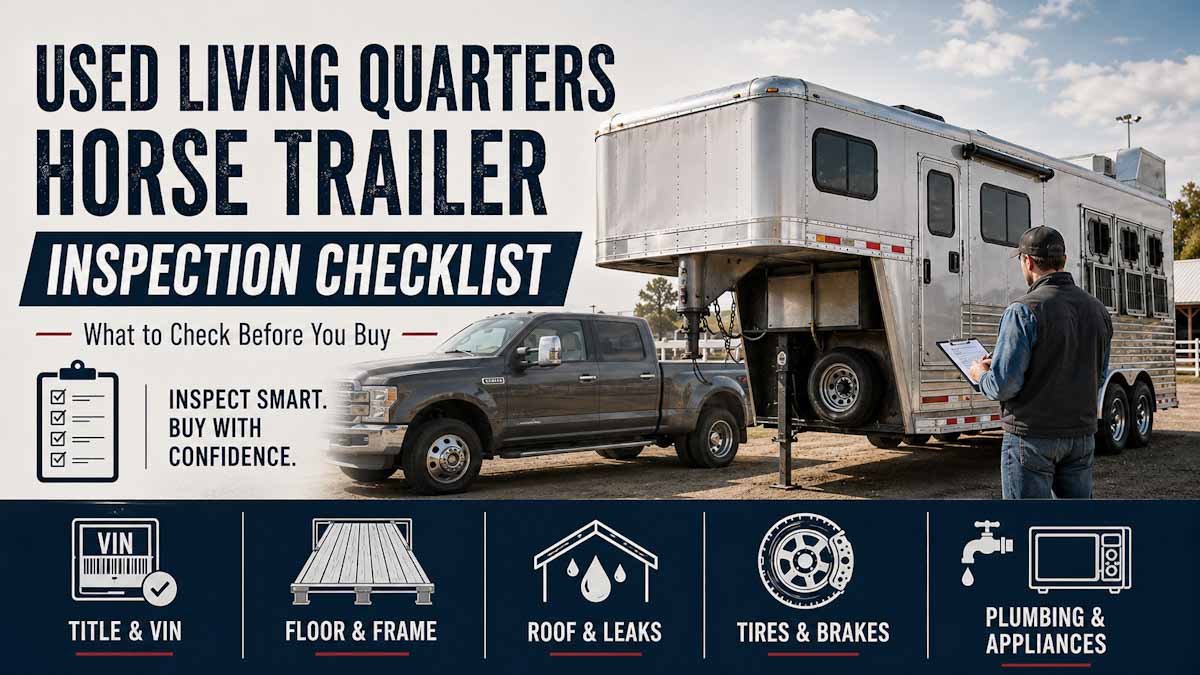
Used Living Quarters Horse Trailer Inspection Checklist
Buying a used living quarters horse trailer can be a smart move, but it can also turn into an expensive mistake if you do not inspect it carefully.
A living quarters horse trailer is more complicated than a regular horse trailer. You are not just checking the horse area. You are also checking the living quarters, plumbing, electrical system, appliances, roof, tires, brakes, axles, title, and overall trailer structure.
That means there are more things to love, but also more ways to get burned.
A clean interior does not automatically mean the trailer is solid. A shiny exterior does not mean the roof is leak-free. A nice living quarters package does not matter if the horse floor is weak, the tires are old, or the brakes do not work.
Use this checklist before buying a used LQ horse trailer so you know what to inspect, what questions to ask, and what red flags to avoid.
Looking for current options? Browse our listings here:
Living Quarters Horse Trailers for Sale
Why Inspection Matters Before Buying a Used LQ Horse Trailer
A used living quarters horse trailer has two major systems in one:
- The horse trailer side
- The camper/living quarters side
The horse trailer side needs to be safe for hauling animals. That means the floor, frame, dividers, mats, doors, latches, windows, axles, brakes, tires, and suspension all matter.
The living quarters side needs to function like a small RV. That means plumbing, electrical, appliances, water tanks, holding tanks, air conditioning, heat, cabinets, roof seals, vents, windows, and flooring all matter too.
When one of those systems has problems, repairs can get expensive fast.
A proper inspection can help you avoid:
- Weak or damaged horse floors
- Hidden water damage
- Roof leaks
- Old or unsafe tires
- Non-working brakes
- Plumbing problems
- Electrical issues
- Appliance failures
- Title problems
- Overpriced trailers
- Unsafe towing setups
Do not fall in love with the trailer before you inspect it. That is how buyers make bad decisions.
Start With the Title, VIN, and Paperwork
Before crawling under the trailer or testing appliances, start with the paperwork.
If the title is messy, the rest of the inspection may not matter.
Check the Title
Ask to see the title before committing to the trailer.
Look for:
- Clear title
- Seller’s name matching the title
- Correct trailer year, make, and model
- No unexpected lienholder
- No salvage or rebuilt branding unless fully disclosed
- VIN on title matching the trailer VIN
If the seller says they do not have the title, be careful. That does not always mean the trailer is bad, but it does mean you need to slow down.
Check the VIN
Find the VIN plate or stamped VIN on the trailer.
Make sure it matches:
- Title
- Bill of sale
- Registration
- Manufacturer plate
- Any lender or financing paperwork
If the VIN is missing, altered, hard to read, or does not match the paperwork, that is a major red flag.
Ask About Liens
Ask directly:
- Is there a lien on the trailer?
- Is it financed?
- Is the lender holding the title?
- Will the lien be released before or at sale?
- Can the seller provide payoff instructions?
A trailer with a lien can still be bought, but the payoff process needs to be handled correctly.
Inspect the Horse Area
The horse area is the most important safety section of the trailer.
A pretty living quarters area is worthless if the horse compartment is unsafe.
Check the Stall Area
Look closely at:
- Stall dividers
- Divider padding
- Divider pins and latches
- Butt bars or breast bars
- Wall padding
- Escape doors
- Drop-down windows
- Window bars
- Roof vents
- Fans
- Interior lights
- Rear doors
- Ramp, if equipped
- Step-up area
- Kick walls
- Mangers
- Tie rings
- Drainage
Everything should open, close, latch, and secure properly.
If a divider latch is weak, a window is broken, or a door does not secure correctly, that can become dangerous during travel.
Check for Sharp Edges
Run your hand carefully near areas horses may touch.
Look for:
- Broken trim
- Exposed screws
- Sharp metal
- Cracked welds
- Bent dividers
- Damaged hinges
- Loose hardware
- Torn padding
- Broken window frames
Horses can injure themselves badly on small defects.
Check Ventilation
Good airflow matters, especially during hot weather and long trips.
Check:
- Roof vents
- Drop-down windows
- Sliding windows
- Rear windows
- Fans
- Air gaps
- Screens
- Bars
Make sure windows and vents open and close properly.
Inspect the Horse Floor Carefully
The horse floor deserves its own section because it is one of the biggest safety issues on a used horse trailer.
Do not skip this.
Do not just glance at the mats.
Do not accept “the floor is fine” without checking.
Pull the Mats
If possible, pull the rubber mats and inspect the actual floor underneath.
This is where problems hide.
Check for:
- Rot
- Corrosion
- Soft spots
- Cracks
- Holes
- Urine damage
- Pitting
- Moisture trapped under mats
- Loose boards
- Weak welds
- Floor separation
- Uneven floor sections
If the seller refuses to let you inspect under the mats, that is a red flag.
Aluminum Floor Inspection
On aluminum floors, look for:
- White powdery corrosion
- Pitting
- Cracks
- Thin areas
- Weld damage
- Urine corrosion
- Loose seams
- Flexing under weight
Aluminum does not rust like steel, but it can corrode and weaken.
Wood Floor Inspection
On wood floors, look for:
- Rot
- Soft boards
- Splitting
- Moisture damage
- Sagging
- Dark stained areas
- Weak spots around seams
- Boards that move under pressure
Use a flashlight and inspect from above and underneath when possible.
Steel Floor or Frame Inspection
On steel areas, look for:
- Rust
- Flaking metal
- Holes
- Deep corrosion
- Cracked welds
- Weak crossmembers
- Fresh paint hiding rust
- Soft or swollen areas nearby
Surface rust may not be a deal breaker, but structural rust is different.
Inspect the Roof and Look for Leaks
Water damage can ruin a living quarters horse trailer.
A roof leak may start small, but over time it can damage walls, cabinets, flooring, insulation, wiring, and interior panels.
Check the Roof
If it is safe to do so, inspect the roof.
Look at:
- Roof seams
- Sealant
- Vents
- Air conditioner area
- Skylights
- Antenna mounts
- Roof rack or hay rack mounts
- Screw holes
- Soft areas
- Cracks
- Previous patches
- Loose trim
Old, cracked, or messy sealant does not automatically mean the trailer leaks, but it does mean maintenance may be overdue.
Check Inside for Leak Signs
Inside the living quarters, look for:
- Ceiling stains
- Wall stains
- Soft wall panels
- Swollen trim
- Musty smell
- Soft flooring
- Cabinet damage
- Peeling wallpaper
- Water marks around windows
- Water marks around roof vents
- Discoloration near the air conditioner
- Moisture around the mattress area
Do not ignore a musty smell. That can indicate hidden water damage.
Check Around Windows and Doors
Water often enters around openings.
Inspect:
- Window seals
- Door seals
- Roof vents
- Exterior compartments
- Tack doors
- Rear doors
- Escape doors
- Slide-out seals, if equipped
If you see staining below a window or door, ask what caused it.
Inspect the Living Quarters
The living quarters area should be checked like a small RV.
Do not just walk in and say, “This looks nice.”
Test everything.
Check the General Interior
Look at:
- Flooring
- Walls
- Ceiling
- Cabinets
- Countertops
- Dinette
- Sofa
- Mattress area
- Closets
- Drawers
- Trim
- Lights
- Outlets
- Windows
- Screens
- Shades
- Interior doors
Watch for signs of damage, poor repairs, or heavy use.
Check the Bathroom
Test or inspect:
- Toilet
- Shower
- Sink
- Faucet
- Shower pan
- Shower walls
- Bathroom vent
- Floor around toilet
- Floor around shower
- Cabinet under sink
- Water stains
- Soft flooring
- Odors
Bathroom leaks can cause hidden floor damage.
Check the Kitchen Area
Inspect:
- Refrigerator
- Microwave
- Cooktop
- Sink
- Faucet
- Cabinets
- Countertop
- Range hood
- Water pump
- Lights
- Outlets
Ask whether appliances work on all intended power sources.
For example, some refrigerators may run on electric, propane, or both, depending on the trailer.
Check Air Conditioning and Heat
Run the air conditioner if power is available.
Check:
- Cold air output
- Fan speed
- Strange noises
- Water dripping inside
- Thermostat operation
- Roof area around the AC
- Breaker behavior
Also test the heat system if equipped.
A non-working AC or furnace can be expensive to repair or replace.
Inspect Plumbing and Tanks
Plumbing problems can be annoying, messy, and expensive.
Do not assume everything works just because the living quarters looks clean.
Test the Water System
If possible, test:
- Fresh water tank
- Water pump
- Sink faucet
- Shower
- Toilet
- Water heater
- Outside water connection
- Drainage
- Tank valves
Listen for the pump cycling when no water is running. That can indicate a leak or pressure issue.
Check for Leaks
Look under:
- Kitchen sink
- Bathroom sink
- Shower
- Toilet
- Water heater
- Water pump
- Exterior compartments
- Low-point drains
- Tank areas
Look for water stains, soft flooring, swollen wood, or moldy smells.
Check the Holding Tanks
Ask about:
- Fresh water tank
- Gray water tank
- Black water tank
- Tank capacity
- Tank leaks
- Valve operation
- Sewer hose storage
- Odors
- Winterization history
Bad tank valves or cracked tanks can be nasty problems.
Inspect Electrical Systems
A living quarters trailer has both trailer wiring and living quarters electrical systems.
You need to check both.
Trailer Electrical
Inspect:
- 7-way plug
- Running lights
- Brake lights
- Turn signals
- Interior horse area lights
- Exterior loading lights
- Reverse lights, if equipped
- Breakaway battery
- Breakaway switch
- Wiring condition
Bad trailer wiring can create safety issues on the road.
Living Quarters Electrical
Check:
- Shore power connection
- Breaker panel
- Converter
- Batteries
- Battery charger
- Interior lights
- Outlets
- GFCI outlets
- Refrigerator power
- Microwave power
- Air conditioner power
- Water heater power, if electric
- Inverter, if equipped
Bring a simple outlet tester if you want to be more thorough.
Battery Condition
Ask:
- How old are the batteries?
- Do they hold charge?
- Are they properly secured?
- Are terminals clean?
- Is there corrosion?
- Does the charging system work?
Weak batteries are common on used trailers.
Inspect Tires, Brakes, Bearings, and Axles
This is where buyers get lazy, and it is stupid.
Tires, brakes, bearings, and axles are not minor details. They are safety systems.
Check Tire Age
Trailer tires can age out before they look worn out.
Check the tire date code, not just tread depth.
Look for:
- Cracks
- Dry rot
- Bulges
- Uneven wear
- Mismatched tires
- Wrong load range
- Low tread
- Sidewall damage
- Old spare tire
If the tires are old, budget for replacement even if they look decent.
Check Brakes
Ask when the brakes were last serviced.
Check:
- Brake controller function
- Brake wiring
- Brake response
- Breakaway system
- Uneven braking
- Strange noises
- Worn components
A trailer that can be pulled is not automatically safe to stop.
Check Bearings
Ask:
- When were the bearings last packed?
- Were seals replaced?
- Has a wheel bearing ever failed?
- Are there maintenance records?
- Is there grease leaking near hubs?
Bearing failure on the road can create a serious problem.
Check Axles and Suspension
Look for:
- Uneven tire wear
- Bent axles
- Cracked springs
- Worn bushings
- Broken hangers
- Rusted hardware
- Low ride height
- Trailer leaning
- Damage near axle mounts
Uneven tire wear can be a sign of axle or alignment problems.
Inspect the Frame, Exterior, and Structure
The outside of the trailer can tell you a lot about how it was maintained.
Check the Frame
Inspect:
- Frame rails
- Crossmembers
- Welds
- Rust
- Corrosion
- Cracks
- Previous repairs
- Accident damage
- Fresh paint over problem areas
- Gooseneck area
- Coupler area
- Safety chains
- Jack mounts
The gooseneck and hitch area deserve extra attention because they carry major stress.
Check Exterior Panels
Look for:
- Dents
- Loose panels
- Missing screws
- Cracked trim
- Damaged seams
- Bad caulking
- Corrosion
- Hail damage
- Poor repairs
- Mismatched paint or panels
Cosmetic damage may be acceptable. Structural damage is different.
Check Doors and Compartments
Open and close every door.
Check:
- Main entry door
- Tack room door
- Rear doors
- Escape doors
- Manger doors
- Exterior storage doors
- Battery compartment
- Propane compartment
- Generator compartment
Make sure latches work and seals are not falling apart.
Inspect Generator and Propane Systems
If the trailer has a generator, test it.
Do not just accept “it worked last time.”
Generator Inspection
Check:
- Generator hours
- Startup
- Smooth running
- Oil condition
- Service history
- Fuel source
- Output under load
- Ability to run the AC
- Strange noises
- Exhaust location
- Compartment ventilation
A generator that starts but cannot run under load may need service.
Propane System
If equipped, inspect:
- Propane tanks
- Tank age
- Tank mounts
- Hoses
- Regulator
- Shutoff valves
- Appliance operation
- Propane smell
- Leak history
Propane problems should be handled seriously.
Check Trailer Weight and Truck Compatibility
A used living quarters horse trailer may be heavier than you expect.
Before buying, ask for:
- Empty weight
- GVWR
- Axle ratings
- Tire ratings
- Cargo carrying capacity
- Estimated pin weight
- Weight sticker
- Scale weight, if available
Then compare those numbers to your truck’s:
- Towing capacity
- Payload capacity
- Rear axle rating
- Tire ratings
- Hitch rating
- Gross combined weight rating
Do not ask only, “Can my truck pull it?”
That is not enough.
The better question is:
Can my truck safely carry, control, and stop this trailer when it is fully loaded?
For more help with towing and weight, read:
Living Quarters Horse Trailer Weight Guide
Questions to Ask the Seller
Before buying, ask the seller direct questions.
Ownership Questions
- How long have you owned the trailer?
- Why are you selling it?
- Do you have a clear title?
- Is there a lien?
- Was it used personally or commercially?
- How often was it used?
- Was it stored indoors or outdoors?
Maintenance Questions
- Do you have maintenance records?
- When were the bearings last packed?
- When were the brakes last serviced?
- When were the tires replaced?
- When was the roof last resealed?
- Has the trailer ever leaked?
- Has the floor ever been repaired?
- Has it ever been in an accident?
Living Quarters Questions
- Does the AC work?
- Does the heat work?
- Does the refrigerator work?
- Does the water heater work?
- Does the water pump work?
- Does the toilet work?
- Does the shower work?
- Do all outlets and lights work?
- Does the generator work?
- Are there any known plumbing issues?
Horse Area Questions
- Has the floor been inspected recently?
- Are there any soft spots?
- Are the mats included?
- Do all dividers and latches work?
- Do all windows and vents work?
- Are there any sharp edges or damaged areas?
- Has the trailer hauled large horses?
If the seller dodges basic questions, that is a warning sign.
Red Flags When Buying a Used Living Quarters Horse Trailer
Some issues are minor. Others are deal killers unless the price is low enough and you know exactly what repairs will cost.
Major Red Flags
Be very careful if you find:
- Soft horse floor
- Rotten wood floor
- Severe aluminum corrosion
- Structural rust
- Cracked frame
- Bent axles
- Active roof leaks
- Musty smell
- Swollen walls
- Soft living quarters floor
- Non-working brakes
- Missing or mismatched VIN
- Title problems
- Seller refuses inspection
- Seller will not let you pull mats
- Old tires with cracking
- Major electrical issues
- Unexplained water stains
- Evidence of accident damage
These are not small problems. They can affect safety, value, and resale.
Smaller Issues That May Still Matter
These may not kill the deal, but they can affect price:
- Worn upholstery
- Cosmetic dents
- Faded decals
- Weak batteries
- Worn awning fabric
- Broken screens
- Minor cabinet wear
- Older appliances
- Non-working stereo
- Small plumbing repairs
- Worn mattress
- Light surface rust
Small issues add up. Use them when negotiating.
Should You Hire a Professional Inspector?
If you are spending serious money, hiring a professional can be smart.
Consider getting help from:
- Trailer repair shop
- RV technician
- Horse trailer dealer
- Mobile trailer inspector
- Mechanic familiar with trailers
- Welder or fabrication shop for structural concerns
A professional inspection may cost money up front, but it can save you from buying a trailer with hidden damage.
This matters even more if you are buying sight unseen or traveling a long distance.
What to Bring When Inspecting a Used LQ Horse Trailer
Bring a small inspection kit.
Useful items include:
- Flashlight
- Gloves
- Notepad
- Phone charger
- Tire pressure gauge
- Ladder, if safe and practical
- Outlet tester
- Paper towels
- Moisture meter, optional
- Screwdriver or small tool for light probing
- Camera or phone
- Copy of your truck ratings
- Checklist
Take photos and videos during the inspection. It is easy to forget details later.
Final Buying Advice
A used living quarters horse trailer can be a great buy if it has been maintained well.
But do not buy based only on the interior, brand name, or number of stalls.
Check the things that actually matter:
- Title
- VIN
- Horse floor
- Roof
- Leak signs
- Tires
- Brakes
- Bearings
- Axles
- Frame
- Plumbing
- Electrical
- Appliances
- Generator
- Weight ratings
- Truck compatibility
The right used trailer should be safe for your horses, comfortable for your trips, and properly matched to your truck.
The wrong trailer can turn into a repair bill on wheels.
Ready to compare available trailers?
Browse Living Quarters Horse Trailers for Sale
Frequently Asked Questions
What should I check before buying a used living quarters horse trailer?
Check the title, VIN, horse floor, roof, tires, brakes, bearings, axles, frame, plumbing, electrical system, appliances, generator, living quarters condition, and weight ratings. The floor, roof, brakes, tires, and title are especially important.
Should I pull the mats before buying a used horse trailer?
Yes. You should inspect under the mats whenever possible. Mats can hide rot, corrosion, soft spots, cracks, urine damage, and moisture problems.
How do I know if a horse trailer floor is bad?
Signs of a bad floor may include soft spots, rot, corrosion, cracks, holes, sagging, movement under weight, loose boards, pitting, or damage around seams. If you are unsure, have a trailer professional inspect it.
What are signs of water damage in a living quarters trailer?
Signs of water damage may include ceiling stains, wall stains, soft floors, swollen panels, musty smells, peeling wallpaper, cabinet damage, discoloration around vents or windows, and soft areas near the bathroom or kitchen.
Are old trailer tires dangerous?
Yes. Trailer tires can become unsafe from age even if the tread looks good. Check the tire date code, sidewalls, cracks, load range, and overall condition before towing.
Should I test the appliances before buying?
Yes. Test the refrigerator, microwave, cooktop, air conditioning, heat, water heater, water pump, lights, outlets, and generator if equipped. Non-working appliances can be expensive to repair or replace.
Is a clear title important when buying a used trailer?
Yes. A clear title helps prove ownership and reduces the risk of title problems. Make sure the VIN on the title matches the trailer.
Should I buy a used LQ horse trailer sight unseen?
Buying sight unseen is risky. If you cannot inspect it yourself, consider hiring a professional inspector or asking for detailed photos, videos, VIN verification, title proof, and live video walkthroughs.
What is the biggest red flag on a used horse trailer?
A weak or damaged horse floor is one of the biggest red flags because it affects horse safety. Title problems, active leaks, structural rust, non-working brakes, and mismatched VINs are also major concerns.
Can small problems help with negotiation?
Yes. Cosmetic wear, old tires, weak batteries, worn awnings, minor appliance issues, and small repairs may help you negotiate. Major safety or structural problems should be handled much more carefully.